Did OpenAI Say Sam Altman Got No Equity in 2025? Separating Ownership Myths from Facts
In here recent months, questions and speculation have swirled around Sam Altman’s equity stake in OpenAI following the company’s 2023 recapitalization and restructuring announcements. A particularly persistent rumor claims that Sam Altman has no equity in OpenAI as of 2025. Is this true? To answer this, we need to unpack complex aspects of OpenAI’s corporate structure, its different related entities, and the multiple meanings of ownership. This analysis references official sources including OpenAI Terms of Use (European terms), OpenAI rest-of-world terms of use, and public disclosures from OpenAI, OpenAI Group PBC, and the OpenAI Foundation.
Understanding ChatGPT’s Relationship to OpenAI
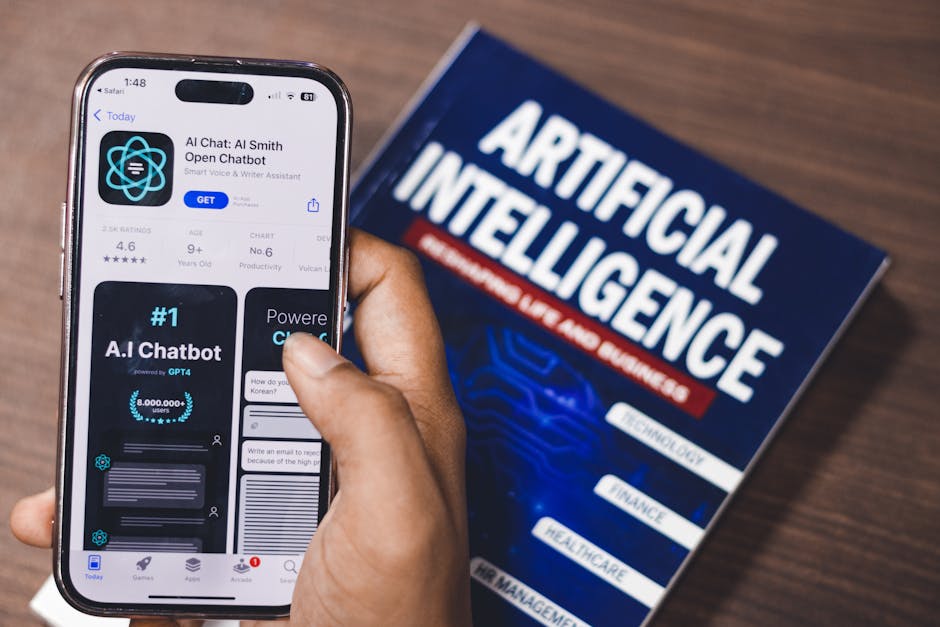
First, let's clarify what ChatGPT actually is. ChatGPT is not a standalone company or separate legal entity. Instead, it is a product developed and operated by OpenAI. In the context of online software platforms and AI services, the branding often obscures corporate arrangements. But ChatGPT is an offering from OpenAI—a key distinction often missed in public discussion.
This matters because the equity stakes and ownership interests pertain to OpenAI and its organizational structure, not to ChatGPT as if it were independently owned or funded.
The Four Meanings of Ownership
One of the biggest sources of confusion around the “Altman equity statement” and “OpenAI recapitalization disclosure” is failing https://smoothdecorator.com/is-the-openai-foundation-the-same-thing-as-the-old-openai-nonprofit/ to differentiate between four distinct types of ownership:

- Operator ownership: Who runs the day-to-day operations and executive management? Sam Altman is clearly the CEO and operational leader of OpenAI and its product line, including ChatGPT.
- Legal structure ownership: Which legal entity owns what? OpenAI comprises several entities: the nonprofit OpenAI Foundation, the public benefit corporation OpenAI Group PBC, and operations under OpenAI, Inc. Understanding how these interlock is critical.
- Economic ownership: Who holds financial stake or equity, entitling them to profits or residual value? This is often the focus of questions about Altman’s fate post-recapitalization, but it is the most volatile and complex ownership form.
- Governance control: Who decides on strategy, board membership, and high-level governance? In OpenAI’s model, the OpenAI Foundation retains special rights to control the board and ensure mission adherence.
Public confusion arises when these meanings get conflated or overlooked, resulting in misleading or oversimplified claims.
OpenAI’s Legal and Corporate Structure
OpenAI began as a nonprofit AI research organization. Over time, to secure capital and compete in the lucrative AI market, it restructured. This gave rise to the OpenAI Group PBC, a public benefit corporation, designed to attract investment while preserving a capped-profit model and mission alignment. Meanwhile, the OpenAI Foundation holds special governance powers.
Entity Type Role Ownership / Governance Characteristics OpenAI Foundation Nonprofit Mission guardian, holds special governance rights Controls board via supermajority rights, no direct economic ownership OpenAI Group PBC Public Benefit Corporation Operating entity for commercial AI products (e.g., ChatGPT) Investor equity held here, capped profit model OpenAI, Inc. Subsidiary Development and deployment of AI products Part of group structure, controlled by OpenAI Group PBC and FoundationThe OpenAI Foundation’s special rights allow it to appoint or remove the majority of the board, ensuring the organization’s mission remains central — even as commercial interests grow. This governance control is distinct from equity ownership or economic stake.
Altman's Economic Stake vs. Common Misconceptions
The rumor that “Sam Altman has no equity in 2025” stems from misunderstandings of OpenAI’s announcements and complex equity arrangements post-2023 recapitalization:
- OpenAI’s recapitalization disclosure clarified new investment rounds, dilution, and capped returns to protect mission alignment.
- Economic ownership is volatile and often misinterpreted. While Altman may hold or forgo shares per agreements, his exact economic stake is subject to non-public terms and evolving corporate events.
- Ownership reporting frameworks vary — some focus on voting control, others on financial return rights. These are not always parallel.
Importantly, referring to OpenAI’s European and rest-of-world Terms of Use helps clarify who controls the use of ChatGPT and how user rights are framed. These legal documents underscore that ChatGPT remains wholly under OpenAI's operational umbrella, and user access is licensed under OpenAI’s governance and policy frameworks.
Disambiguating Equity and Control: What We Know
Below is a summary to put the pieces in context:
- Sam Altman’s role as CEO and operator remains undeniable; operational control and leadership are fully vested with him.
- Equity or economic stake might be materially different post-2023 recapitalization. Altman’s personal equity holdings may have changed but are unlikely to have been reduced to zero without public confirmation.
- Governance control lies largely with the OpenAI Foundation, which holds special rights over board composition and mission adherence.
- ChatGPT is an OpenAI product, not a separate company or equity class. Equity myths often arise from misinterpreting product-branding versus corporate ownership.
Why Economic Ownership is Often Misreported
Economic ownership in high-growth AI startups and hybrid public-benefit corporations like OpenAI involves multiple dynamics:
- Capped returns impose limits on investor upside, complicating traditional equity valuation.
- Employee and founder stock options can vest or be forfeited in complex ways depending on performance, clauses, and recapitalization deals.
- Secondary stakeholder rights held by nonprofits or foundations may dilute financial returns but preserve governance power.
- Nonpublic details of agreements and new investment rounds make real-time, accurate ownership mapping difficult for outsiders.
Thus, public statements like “Altman has no equity” tend to oversimplify a far more nuanced reality.
Conclusion: Separating Fact from Fiction
The claim that OpenAI said “Sam Altman got no equity in 2025” is misleading. A thorough review of publicly available terms, disclosures, and OpenAI’s corporate architecture proves that:
- OpenAI and ChatGPT remain part of the same organizational structure, run and governed under a multilayered ownership and control model.
- Altman continues as CEO with leadership control, while his economic ownership stake might reflect complex recapitalization outcomes that are not publicly detailed.
- The OpenAI Foundation exercises special governance powers, distinctly separating economic ownership from mission control.
- Ownership myths arise from conflating operator roles, legal entities, financial stakes, and governance rights.
If you want to stay informed, the best sources remain official OpenAI Terms of Use for Europe, OpenAI rest-of-world terms of use, and investor or regulatory disclosures from OpenAI Group PBC and the OpenAI Foundation.
Remember: Equity stories, especially in innovative AI firms like OpenAI, require careful parsing. Ownership is never just about “shares” — it’s a mosaic of operational control, legal design, economic rights, and governance frameworks working in concert.
Further Reading
- OpenAI Rest-of-World Terms of Use Analysis
- OpenAI European Terms of Use Explained
- OpenAI Group PBC Capital Structure and Governance Disclosure